Buy lthorses.eu ?
We are moving the project
lthorses.eu .
Are you interested in purchasing the domain
lthorses.eu ?
domain@kv-gmbh.de · 0541-91531010
Buy lthorses.eu ?
How have vertebrates evolved?
Vertebrates have evolved over millions of years through a process of natural selection and genetic mutations. They have adapted to various environments by developing specialized traits such as limbs for land movement, wings for flight, and fins for swimming. Vertebrates have also diversified into different species with unique characteristics to better survive and thrive in their respective habitats. Overall, the evolution of vertebrates has been a complex and dynamic process that has led to the incredible diversity of species we see today. **
What are classes of vertebrates?
Vertebrates are animals with a backbone or spinal column. There are five main classes of vertebrates: mammals, birds, reptiles, amphibians, and fish. Each class has unique characteristics and adaptations that help them thrive in their respective environments. These classes are further divided into different orders, families, and species based on specific traits and evolutionary history. **


Similar search terms for Vertebrates
Top-Angebote
Products related to Vertebrates:
-
Victorinox Swiss Army Knife EquestrianThe Victorinox Swiss Army Knife Equestrian is the perfect pocket companion for passionate riders. Designed with equine enthusiasts in mind, it features a compact yet highly effective hoof cleaner, making it ideal for use after rides or while working around the yard. In summary, this knife is portable, practical, and ready to tackle any equine challenge. Tools: Blade, large / Bottle opener / Can opener / Corkscrew / Hoof cleaner / Keyring / Reamer and punch / Screwdriver 5mm / Toothpick / Tweezers / Wire stripper / Wood saw Dimensions: 1.8(H) x 11.1(L) x 3.2(W) cm. Weight: 0.125kg. The Victorinox Swiss Army Knife Equestrian is covered by a Victorinox lifetime warranty. Knives are not for sale to persons under the age of 18. - all knives and bladed products are delivered by Age Verified Delivery (AVD). The carrier may request proof of age in order to deliver your parcel. If proof of age is not available, or the recipient is underage, the carrier will refuse to deliver.57,95 £*Shipping: 0,00 £Secure redirect to the provider
-
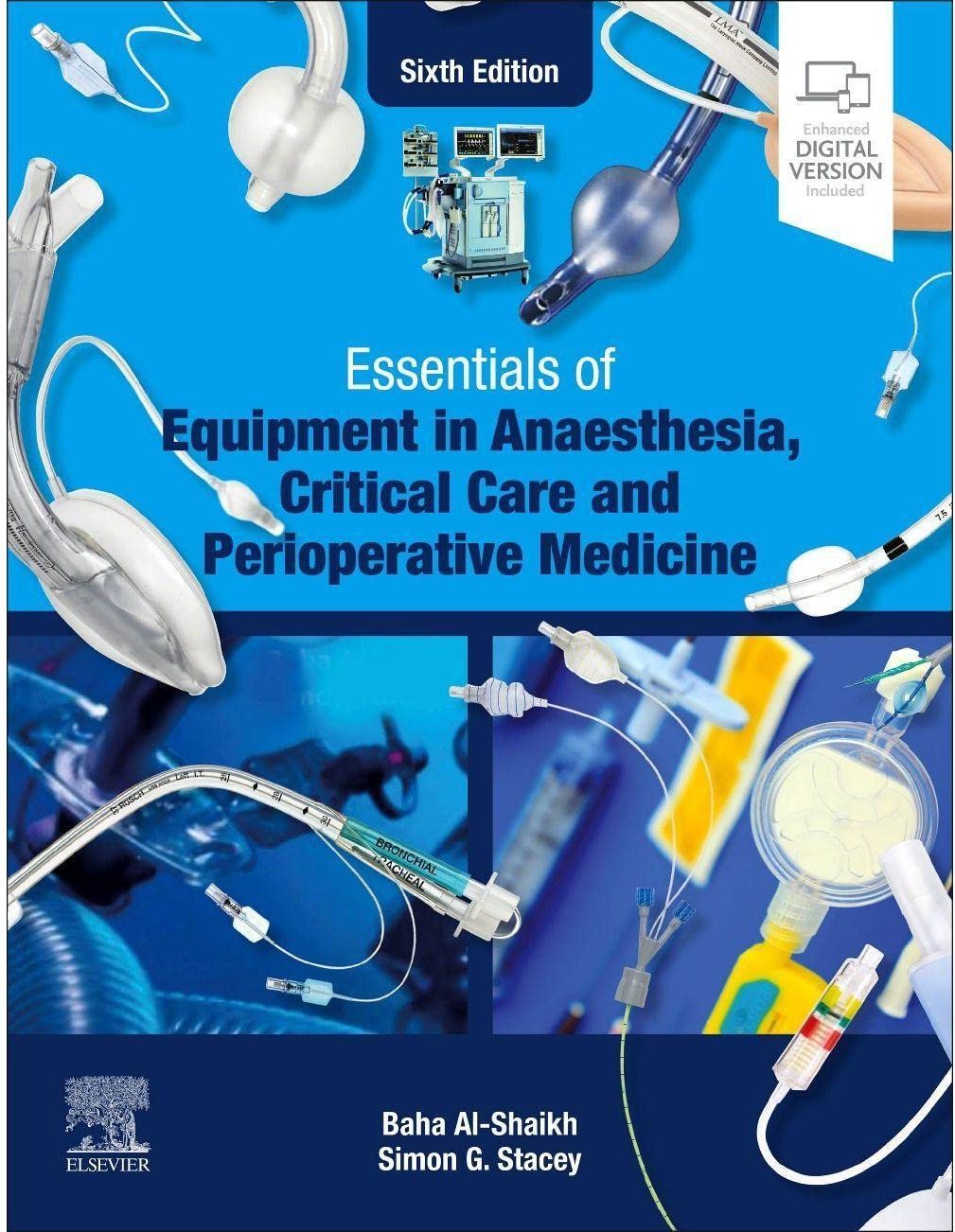
Elsevier Essentials of Equipment in Anaesthesia, Critical Care and Perioperative MedicineEasy to read and follow, Essentials of Equipment in Anaesthesia, Critical Care and Perioperative Medicine makes an otherwise dry subject digestible and easy to learn. This practical textbook comprehensively covers all the equipment used in the operating theatre and intensive care unit, including why it is used and any related safety concerns. It has been fully updated in its sixth edition to include new technologies introduced during the Covid-19 pandemic. This is ideal as the main text for all trainees undertaking the primary FRCA exams and is also suitable anyone who works with anaesthetic equipment, including anaesthetic and intensive care nurses and operating department practitioners. It features concise and consistent text and illustrations, self-assessment features, and exam tips. Portable, concise and simply formatted - a perfect practical companion Clear coloured images and illustrations bring the text to life Follows the Royal College of Anaesthetists postgraduate training and exam syllabus Summary boxes, more than 100 exam style questions, and OSCE stations and exam tips all aid the reader in exam revision Covers new equipment and fully updated relevant to current practice Suggested further reading fully updated New information on: Aladin Cassettes; Glostavent machine; CONTRAfluran system; videolaryngoscopy and high definition camera use in intubation and endoscopy; use of ultrasound in epidural; Penthrox; NRFit devices; Cell saver; ECMO38,99 £*Shipping: 0,00 £Secure redirect to the provider
-
Healfit Counter Respirator Fitness Equipment, Breathing Trainer Mouthpiece, Lung Exercise Tool For Household Health Care Respirator Fitness Equipment, Breathing Trainer Mouthpiece, Lung Exercise Tool For Household Health CareEnhance your fitness and stamina with the Breathing Trainer Exercise Lung Face Mouthpiece Respirator Fitness Equipmentyour compact solution for improving lung performance and endurance. Designed for athletes, fitness enthusiasts, and anyone looking...27,97 $*Shipping: 0,00 $Secure redirect to the provider



-
What are the two oldest groups of vertebrates that evolved from the early vertebrates?
The two oldest groups of vertebrates that evolved from early vertebrates are the jawless fish, such as lampreys and hagfish, and the cartilaginous fish, including sharks, rays, and skates. These groups are considered some of the most ancient vertebrates and have been around for hundreds of millions of years. Jawless fish are characterized by their lack of true jaws, while cartilaginous fish have skeletons made of cartilage instead of bone. **
-
What is a question about vertebrates?
One question about vertebrates could be: How do the skeletal structures of vertebrates, such as humans, fish, and birds, differ in terms of adaptations for movement and support? **
-
What is the evolution of vertebrates?
The evolution of vertebrates is a complex process that spans hundreds of millions of years. It is believed that vertebrates evolved from a group of ancient invertebrate chordates, with the first vertebrates appearing around 500 million years ago. Over time, vertebrates diversified and evolved into a wide range of species, including fish, amphibians, reptiles, birds, and mammals. This evolution was marked by key innovations such as the development of jaws, limbs, and the ability to live on land. Today, vertebrates are the most diverse group of animals on Earth, with over 65,000 species. **
-
Which are the oldest groups of vertebrates?
The oldest groups of vertebrates are jawless fish, which include hagfish and lampreys. These ancient fish have been around for hundreds of millions of years and are considered some of the most primitive vertebrates. They lack true jaws and have a cartilaginous skeleton, distinguishing them from more advanced vertebrates like bony fish, amphibians, reptiles, birds, and mammals. Despite their simple anatomy, jawless fish have managed to survive and adapt to various environments over time. **

Are there vertebrates that do not sleep?
Yes, there are some vertebrates that do not sleep in the traditional sense. For example, certain species of fish, such as some types of sharks, do not have a sleep-wake cycle like mammals and birds. Instead, they have periods of rest where they may reduce their activity but do not enter a true sleep state. Additionally, some species of birds, like the frigatebird, are known to be able to sleep while flying, allowing them to rest without fully shutting down their brains like other animals do during sleep. **
How did the evolution of vertebrates unfold?
The evolution of vertebrates unfolded over millions of years through a series of key events. It is believed that vertebrates evolved from early chordates, which were simple, fish-like organisms with a notochord. Over time, vertebrates developed more complex features such as jaws, limbs, and a bony skeleton. This allowed them to adapt to various environments and eventually gave rise to the diverse array of vertebrates we see today, including fish, amphibians, reptiles, birds, and mammals. **
Top-Angebote
Products related to Vertebrates:
-
Inspire Essentials Tibialis Trainer Tib Bar Strength Training Calf Raise Equipment Tibialis Trainer Tib Bar Strength Training Calf Raise EquipmentStronger lower legs start with targeted training. This specialized tibialis trainer is designed to help build strength in the oftenneglected tibialis anterior muscle, improving ankle stability, balance, and overall leg performance. Built for serious...128,50 $*Shipping: 0,00 $Secure redirect to the provider
-
StayWell Aluminum Alloy Swinging Rope, Durable Gym Equipment For Strength Training Aluminum Alloy Swinging Rope, Durable Gym Equipment For Strength Training"Elevate Your Strength Training with the Compact Steel Fitness Rope Designed for fitness enthusiasts seeking efficient and spacesaving equipment, this 15.7""inch ropefree training rope is a gamechanger for home and commercial gyms. Key Features:..."56,97 $*Shipping: 0,00 $Secure redirect to the provider
-
Victorinox Swiss Army Knife EquestrianThe Victorinox Swiss Army Knife Equestrian is the perfect pocket companion for passionate riders. Designed with equine enthusiasts in mind, it features a compact yet highly effective hoof cleaner, making it ideal for use after rides or while working around the yard. In summary, this knife is portable, practical, and ready to tackle any equine challenge. Tools: Blade, large / Bottle opener / Can opener / Corkscrew / Hoof cleaner / Keyring / Reamer and punch / Screwdriver 5mm / Toothpick / Tweezers / Wire stripper / Wood saw Dimensions: 1.8(H) x 11.1(L) x 3.2(W) cm. Weight: 0.125kg. The Victorinox Swiss Army Knife Equestrian is covered by a Victorinox lifetime warranty. Knives are not for sale to persons under the age of 18. - all knives and bladed products are delivered by Age Verified Delivery (AVD). The carrier may request proof of age in order to deliver your parcel. If proof of age is not available, or the recipient is underage, the carrier will refuse to deliver.57,95 £*Shipping: 0,00 £Secure redirect to the provider
-
Elsevier Essentials of Equipment in Anaesthesia, Critical Care and Perioperative MedicineEasy to read and follow, Essentials of Equipment in Anaesthesia, Critical Care and Perioperative Medicine makes an otherwise dry subject digestible and easy to learn. This practical textbook comprehensively covers all the equipment used in the operating theatre and intensive care unit, including why it is used and any related safety concerns. It has been fully updated in its sixth edition to include new technologies introduced during the Covid-19 pandemic. This is ideal as the main text for all trainees undertaking the primary FRCA exams and is also suitable anyone who works with anaesthetic equipment, including anaesthetic and intensive care nurses and operating department practitioners. It features concise and consistent text and illustrations, self-assessment features, and exam tips. Portable, concise and simply formatted - a perfect practical companion Clear coloured images and illustrations bring the text to life Follows the Royal College of Anaesthetists postgraduate training and exam syllabus Summary boxes, more than 100 exam style questions, and OSCE stations and exam tips all aid the reader in exam revision Covers new equipment and fully updated relevant to current practice Suggested further reading fully updated New information on: Aladin Cassettes; Glostavent machine; CONTRAfluran system; videolaryngoscopy and high definition camera use in intubation and endoscopy; use of ultrasound in epidural; Penthrox; NRFit devices; Cell saver; ECMO38,99 £*Shipping: 0,00 £Secure redirect to the provider
-
How have vertebrates evolved?
Vertebrates have evolved over millions of years through a process of natural selection and genetic mutations. They have adapted to various environments by developing specialized traits such as limbs for land movement, wings for flight, and fins for swimming. Vertebrates have also diversified into different species with unique characteristics to better survive and thrive in their respective habitats. Overall, the evolution of vertebrates has been a complex and dynamic process that has led to the incredible diversity of species we see today. **
-
What are classes of vertebrates?
Vertebrates are animals with a backbone or spinal column. There are five main classes of vertebrates: mammals, birds, reptiles, amphibians, and fish. Each class has unique characteristics and adaptations that help them thrive in their respective environments. These classes are further divided into different orders, families, and species based on specific traits and evolutionary history. **
-
What are the two oldest groups of vertebrates that evolved from the early vertebrates?
The two oldest groups of vertebrates that evolved from early vertebrates are the jawless fish, such as lampreys and hagfish, and the cartilaginous fish, including sharks, rays, and skates. These groups are considered some of the most ancient vertebrates and have been around for hundreds of millions of years. Jawless fish are characterized by their lack of true jaws, while cartilaginous fish have skeletons made of cartilage instead of bone. **
-
What is a question about vertebrates?
One question about vertebrates could be: How do the skeletal structures of vertebrates, such as humans, fish, and birds, differ in terms of adaptations for movement and support? **
Similar search terms for Vertebrates
-
Healfit Counter Respirator Fitness Equipment, Breathing Trainer Mouthpiece, Lung Exercise Tool For Household Health Care Respirator Fitness Equipment, Breathing Trainer Mouthpiece, Lung Exercise Tool For Household Health CareEnhance your fitness and stamina with the Breathing Trainer Exercise Lung Face Mouthpiece Respirator Fitness Equipmentyour compact solution for improving lung performance and endurance. Designed for athletes, fitness enthusiasts, and anyone looking...27,97 $*Shipping: 0,00 $Secure redirect to the provider
-
Uplifted Finds U Shape Facial Jawline Exerciser Training Equipment whiteDefine and strengthen your facial profile with the Facial Pop N Go Jaw Exerciser, a specialized fitness tool designed to act as an efficient tool for jawline sculpting and facial muscle toning. Specifically engineered with a Ushaped ergonomic...55,97 $*Shipping: 0,00 $Secure redirect to the provider
-
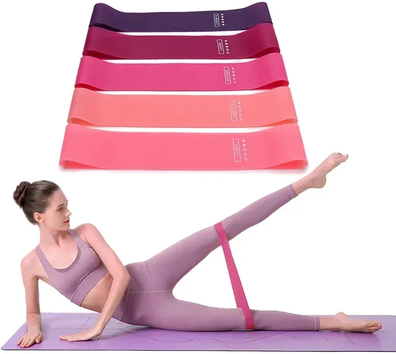
Multisell Products Hub Resistance Bands For Fitness, Workout Equipment For Crossfit, Gym Strength Training Resistance Bands For Fitness, Workout Equipment For Crossfit, Gym Strength TrainingMaximize Your Workout Potential Take your fitness journey to the 5 pcs next level with our Elastic Bands for Fitness. Designed to enhance your strength training, these resistance bands are perfect for all fitness levels, from beginners to seasoned...34,97 $*Shipping: 0,00 $Secure redirect to the provider
-
What is the evolution of vertebrates?
The evolution of vertebrates is a complex process that spans hundreds of millions of years. It is believed that vertebrates evolved from a group of ancient invertebrate chordates, with the first vertebrates appearing around 500 million years ago. Over time, vertebrates diversified and evolved into a wide range of species, including fish, amphibians, reptiles, birds, and mammals. This evolution was marked by key innovations such as the development of jaws, limbs, and the ability to live on land. Today, vertebrates are the most diverse group of animals on Earth, with over 65,000 species. **
-
Which are the oldest groups of vertebrates?
The oldest groups of vertebrates are jawless fish, which include hagfish and lampreys. These ancient fish have been around for hundreds of millions of years and are considered some of the most primitive vertebrates. They lack true jaws and have a cartilaginous skeleton, distinguishing them from more advanced vertebrates like bony fish, amphibians, reptiles, birds, and mammals. Despite their simple anatomy, jawless fish have managed to survive and adapt to various environments over time. **
-
Are there vertebrates that do not sleep?
Yes, there are some vertebrates that do not sleep in the traditional sense. For example, certain species of fish, such as some types of sharks, do not have a sleep-wake cycle like mammals and birds. Instead, they have periods of rest where they may reduce their activity but do not enter a true sleep state. Additionally, some species of birds, like the frigatebird, are known to be able to sleep while flying, allowing them to rest without fully shutting down their brains like other animals do during sleep. **
-
How did the evolution of vertebrates unfold?
The evolution of vertebrates unfolded over millions of years through a series of key events. It is believed that vertebrates evolved from early chordates, which were simple, fish-like organisms with a notochord. Over time, vertebrates developed more complex features such as jaws, limbs, and a bony skeleton. This allowed them to adapt to various environments and eventually gave rise to the diverse array of vertebrates we see today, including fish, amphibians, reptiles, birds, and mammals. **
* All prices are inclusive of VAT and, if applicable, plus shipping costs. The offer information is based on the details provided by the respective shop and is updated through automated processes. Real-time updates do not occur, so deviations can occur in individual cases. ** Note: Parts of this content were created by AI.